Logo Krupa Gallery
News
28 November 2025 — 1 March 2026

Paweł Baśnik

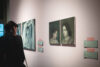
Paweł Baśnik at the Municipal Gallery in Częstochowa

From left to right: Paweł Baśnik, "Hybrid (I)", "Hybrid (II)", "Hybrid (III)", "Death of the Father", oil on canvas. Exhibition view from BODY: Several Views on Nudity at the Municipal Gallery in Częstochowa. Photos by Robert Jodłowski. From left to right: Paweł Baśnik, "Hybrid (I)", "Hybrid (II)", "Hybrid (III)", "Death of the Father", oil on canvas. Exhibition view from BODY: Several Views on Nudity at the Municipal Gallery in Częstochowa. Photos by Robert Jodłowski. 

We are pleased to announce that Paweł Baśnik’s works are part of the exhibition BODY: Several Views on Nudity at the Municipal Gallery in Częstochowa.

The body grounds us in reality; it is a kind of “vehicle for being in the world,” yet corporeality also holds many metaphors. It functions as a tool through which, moving from sensing and reacting to self-analysis, we enter a more universal realm of reflection and communication. The works selected for the exhibition create a rich dialogue between individual expression and the universal themes of human experience.

The exhibition presents a broad understanding of the nude in contemporary Polish art. We treat the nude as an act (actus) occurring in the space between the biological body and the body as a cultural artefact (act). The show guides the viewer through a full spectrum of perspectives on the body — from idealisation to conscious deconstruction — revealing that the nude is more than the image of nakedness: it is a universal language for describing the human condition.

The exhibition is divided into several thematic areas of bodily representation: from traditional nudes, that is, corporeal exemplifications of experiences such as beauty, love, and ecstasy; to the body as a site of identity formation; the ephemeral or “disembodied” body situated on the boundary between worlds; and finally, the body treated as a purely plastic form. A key thematic sphere that opens further discussion includes images of the posthuman body — a place where new identities emerge — as well as works created with the use of the latest technologies, offering visions of a future still unpredictable for us.

Artists featured in the exhibition:
Agnieszka Apoznańska, Michał Bajsarowicz, Paweł Baśnik, Andrzej Bednarczyk, Zdzisław Beksiński, Judyta Bernaś, Anna Bidzilia, Jan Dubrowin, Lena Dąbska, Marta Deskur, Monika Falkus, Wiesław Garboliński, Teresa Gierzyńska, Zbylut Grzywacz, Katarzyna Górna, Yaroslava Holysh, Marcin Jaszczak, Joanna Jeżewska-Desperak, Krzysztof Koniczek, Jadwiga Kosikowska, Agata Lankamer, Przemysław Lasak, Jan Lebenstein, Pola Minster, Piotr Naliwajko, Józef Nowak, Jerzy Nowosielski, Marta Olejniczak, Zofia Pałucha, Małgorzata Pawlak, Martyna Pinkowska, Małgorzata Rusiecka, Leszek Rózga, Alina Sibera, Janina Skolik-Kędziora, Leszek Sobocki, Franciszek Starowieyski, Paweł Szlotawa, Janusz Szpyt, Jacek Sztuka, Krystyna Szwajkowska, Jacek Waltoś, Wacław Wantuch, Szymon Wypych, Leszek Żegalski.

News
21 November 2025 – 11 January 2026

BWA Zielona Góra

al. Niepodległości 19, 65-048 Zielona Góra, Poland

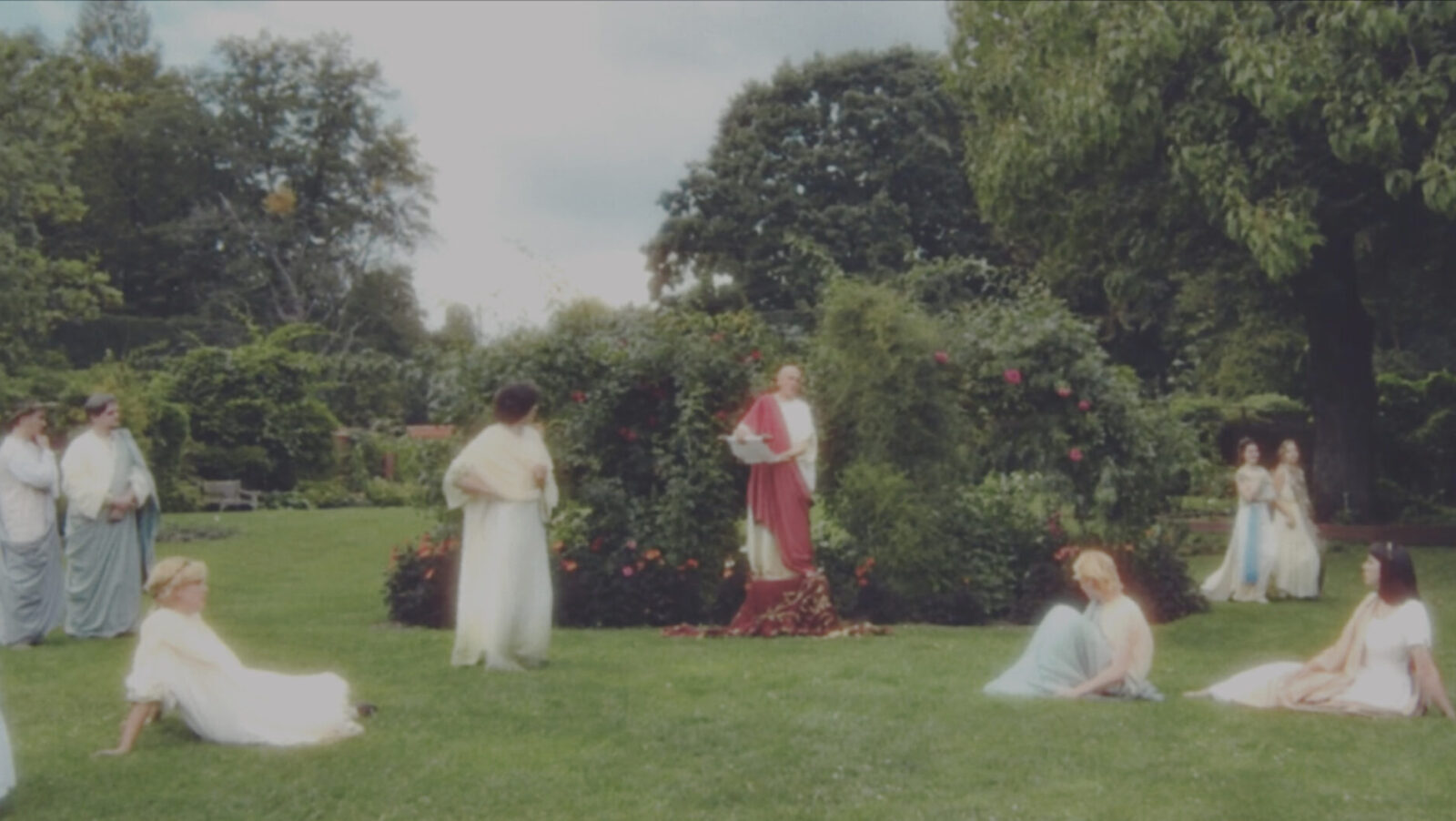
Still from "Plutarch's Speech" by Paweł Baśnik, Justyna Baśnik, Jędrzej Sierpiński, Marta Bratuś; 2025, 19'40'' Still from "Plutarch's Speech" by Paweł Baśnik, Justyna Baśnik, Jędrzej Sierpiński, Marta Bratuś; 2025, 19'40'' 
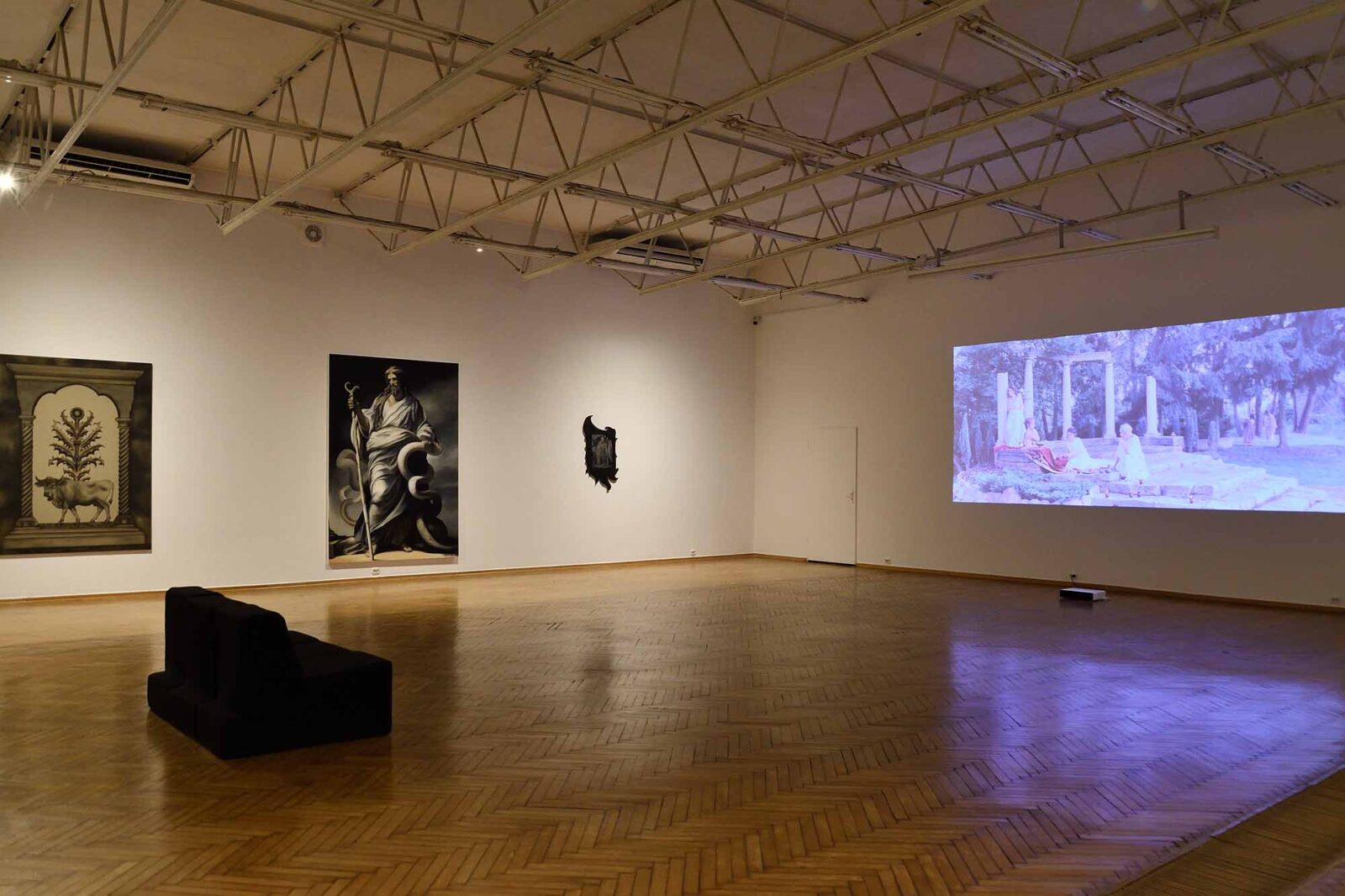
Exhibition view of "Plutarch's Speech" by the Nihilist Church. Photography by Karolina Spiak/BWA Zielona Góra Exhibition view of "Plutarch's Speech" by the Nihilist Church. Photography by Karolina Spiak/BWA Zielona Góra 

Paweł Baśnik, Justyna Baśnik, Nikita Krzyżanowska, and Jędrzej Sierpiński—the founding quartet of the Wrocław art collective Nihilist Church (Kościół Nihilistów)—are currently on view at BWA Zielona Góra with their new exhibition 𝘗𝘭𝘶𝘵𝘢𝘳𝘤𝘩’𝘴 𝘚𝘱𝘦𝘦𝘤𝘩 (Mowa Plutarcha). The show runs until 11 January 2026.

𝘗𝘭𝘶𝘵𝘢𝘳𝘤𝘩’𝘴 𝘚𝘱𝘦𝘦𝘤𝘩 brings attention to the often-marginalized topic of animal rights within contemporary art discourse. The works on view explore interspecies empathy, tracing its roots to ancient ideas of vegetarianism and ethical coexistence.

Alongside new paintings, the exhibition presents a premiere of a new costume film inspired by Plutarch’s text from the first century CE—a remarkably early ethical argument that crosses species boundaries not through religious doctrine but through reasoning that resonates strongly with today’s pro-animal activism.

Featuring an ensemble cast of artists and collaborators, including performers connected to the Wrocław Theatre Academy, the film reenacts Plutarch’s address using a Polish translation by historian Damian Miszczyński. The project is directed collaboratively by Justyna and Paweł Baśnik with filmmaker Marta Bratuś, starring Dariusz Lech in the leading role.

The project is supported by the Botanical Garden of the University of Wrocław, Wrocław Opera, and 66P – Subiektywna Instytucja Kultury.

Exhibitions
11 October – 19 December 2025

Greg Carideo, Henrik Potter, Jungwon Jay Hur, Kamil Dossar, Marlon Kroll, Minh Thang Pham, Viktor Timofeev, and Radek Brousil

My heart is an old museum

11 October — 19 December 2025
KRUPA Gallery, London

Curated by Radek Brousil

Private view:
10 October 2025, 6-8 PM
1 Pakenham Street
WC1X 0LA
London


Viktor Timofeev, Portable Landscapes: 1, 2, 3, 4, 2008, ink on paper, 24 x 32cm. Installation view from My heart is an old museum, 2025, KRUPA Gallery, London. Photography: JUDDartINDEX. Viktor Timofeev, Portable Landscapes: 1, 2, 3, 4, 2008, ink on paper, 24 x 32cm. Installation view from My heart is an old museum, 2025, KRUPA Gallery, London. Photography: JUDDartINDEX. 
Kamil Dossar, Examples of Ruin, 2025, mixed media, 35 x 22 cm. Installation view from My heart is an old museum, 2025, KRUPA Gallery, London. Photography: JUDDartINDEX. Kamil Dossar, Examples of Ruin, 2025, mixed media, 35 x 22 cm. Installation view from My heart is an old museum, 2025, KRUPA Gallery, London. Photography: JUDDartINDEX. 
Radek Brousil, One can't resent one's era without being swiftly punished by it, 2025, oil and acrylic on raw jute in a custom made frame, 34 x 62 cm. Installation view from My heart is an old museum, 2025, KRUPA Gallery, London. Photography: JUDDartINDEX. Radek Brousil, One can't resent one's era without being swiftly punished by it, 2025, oil and acrylic on raw jute in a custom made frame, 34 x 62 cm. Installation view from My heart is an old museum, 2025, KRUPA Gallery, London. Photography: JUDDartINDEX. 
Kamil Dossar, Index Examples, 2025, mixed media, 21 x 30 cm. Installation view from My heart is an old museum, 2025, KRUPA Gallery, London. Photography: JUDDartINDEX. Kamil Dossar, Index Examples, 2025, mixed media, 21 x 30 cm. Installation view from My heart is an old museum, 2025, KRUPA Gallery, London. Photography: JUDDartINDEX. 
Radek Brousil, Two, 2025, wood, church candles, hand forged square head iron nails, 43 x 39 x 79 cm. Installation view from My heart is an old museum, 2025, KRUPA Gallery, London. Photography: JUDDartINDEX. Radek Brousil, Two, 2025, wood, church candles, hand forged square head iron nails, 43 x 39 x 79 cm. Installation view from My heart is an old museum, 2025, KRUPA Gallery, London. Photography: JUDDartINDEX. 
 

My heart is an old museum
and the museum guard with his girded belly would never know you tore up the morning streets with cries the size of kitchen knives, once, before silently rearranging the room to make sure it left no gaps where your furniture had been removed. It was done to perfection; only the books looked a little crestfallen where their twin editions were abducted. There you are, idling in the corner of reason when I turn a folding screen and approach you and see how carelessly you let your breath gather up on the glass, in luminous, feathered circles. Your turn seems unusually well-timed when I sidle up to you with hopes of planting a small kiss on your brushed cheek (you were always master of the artful dodge). All this was bracketed by the shrill call-and-response of whistles at the train platform where you finally left me; one pair of prosthetic voice boxes assuring each other, in all the ways we could not.
  The grammar of time is emergent. Friends said things to the effect of ‘time will tell’, and other phrases with a misplaced sense of ominous knowing. Only my indefatigable refrain could force them to resort to this; I know that when I am sad I have no resolve and indulge my obsessions with ‘what went wrong’ and who-did-what and time runs on with the continuity Bergsonian duration, which I’ve no wherewithal to explain, being hopelessly sleep deprived, and it was months of exhausted clichés before the same friends garnered sufficient courage to ask, very tentatively, ‘are you over her yet’. I am but a semaphore wanting for naught. You can lose the sole of your shoe just as easily on your way to a wedding, it seems, so here I am: trying to forget that that’s exactly where I’d clumsily revealed I’d been reading everything I could find about you online.
  Today I find you in the Southeast Asian quad of the museum, and your gaze is arrested by a moulting piece hailing from Vietnam. It is produced by a technique I dare not pronounce (sơn ta, the plaque reads) and you speak of it as a ‘process of inversion, that nevertheless produces a palimpsest’. I wish to say something about Marker’s Statues Also Die but think only of your breath in my mouth. Astride the beam of your thought (now a rumination on the methods of the ancients in relation to time and proportion involving jute string and nails), forget it, it no longer matters. It’s kind of embryonic in here; there is no movement but our stirrings, only depth and hollows and the most of gorgeous eyebags which I have always worshipped. Our interaction is conditioned by impossibility so instead I train my focus on avoiding ill-fated attempts at inordinately complex words that just wind up entangling me in awkward syntactical constructions. Of course, these are the formulations that adoring you were made up of, and nothing makes me feel safer than recourse to formula.
  I am the happiest simply being entrusted with your museum locker key, and every so often I finger it lovingly in my pocket. Certain rooms of the museum harbour a stillness that hardens or gapes, others draw spider threads from where I stand to all the dark corners of the room. (The girded belly lumbers behind us, cheesily scratching itself.) If I take the time to overthink this, we are our very own examples of indexing and ruin, for which museum conservation provides too perfect an analogy. A structure is made to surrender itself to representation, before duly being destroyed. (To shore up against our years is unforgivably hard to do in your presence.) When I call you by your private nickname, I sound like a progressively degenerating feedback loop that tarnishes itself as it haplessly stutters on, but still, it conjures that weather-worn image of us delightedly discovering Basinski. You are not playing my game though, and so I find myself pleading with my reflection in the face of an old, Czech clock. Is imperfection the only reliable feature of anything; the very style of substance?
  Among these objects of conquest (which we agree need repatriating, as an aside), your iciness finally thaws and the between the fading summits of your peaks dawns the senselessness of loss. Bourgeois restraint forbids our tear from leaving your duct so you quip the much-quipped ‘unprecedented for our times’, as if you were one of Brecht’s newspaper fragments swept up in the maelstrom of a collage. I am just another museum donation of an uncertain make, age and pedigree, falling into a plume of obscurity, your box titled ‘miscellaneous’. The silence of the museum is deafening, like heaven, or second to. Except nothing is forever; your ringtone is a 1990s lyric that reaches out into the stretches of an adjacent hallway and beyond it, to where you wander. Interrupting us is your mildly irritating best friend, a curator, who strictly refers to himself as an ‘organiser’ in all public communication. Outside the pigeons absent-mindedly pattern the sidewalk within the fold of the season; even they know love that little bit better.

Elaine ML Tam

Sign up for our newsletter!
Keep up with our activities